

Partial Dentures: Why Are They Still an Important Option for Replacing Missing Teeth?
Missing one or more teeth? Partial dentures remain a practical, versatile, and often cost-effective solution for restoring your smile, improving chewing ability, and supporting everyday oral function. While dental implants and fixed dental bridges are popular tooth replacement options, removable partial dentures continue to play an important role in modern dentistry.
At Zenith Dental Care, Noida, we help patients explore suitable tooth replacement options based on their oral health, number of missing teeth, budget, and individual requirements.
What Are Partial Dentures?
A partial denture is a removable dental appliance designed to replace one or more missing teeth when some natural teeth remain in the mouth. It consists of artificial teeth attached to a supporting base, which may be made from acrylic, metal, flexible materials, or a combination of these.
Unlike complete dentures, which replace all teeth in an arch, partial dentures replace selected missing teeth while working around the remaining natural teeth.
They can be designed for different clinical situations, including the replacement of missing front teeth, back teeth, or multiple teeth spread across the dental arch.
Why Are Partial Dentures Still Important in Modern Dentistry?
With the growing popularity of dental implants and fixed bridges, patients sometimes assume that removable dentures are outdated. However, partial dentures continue to be an important treatment option because they offer several practical advantages.
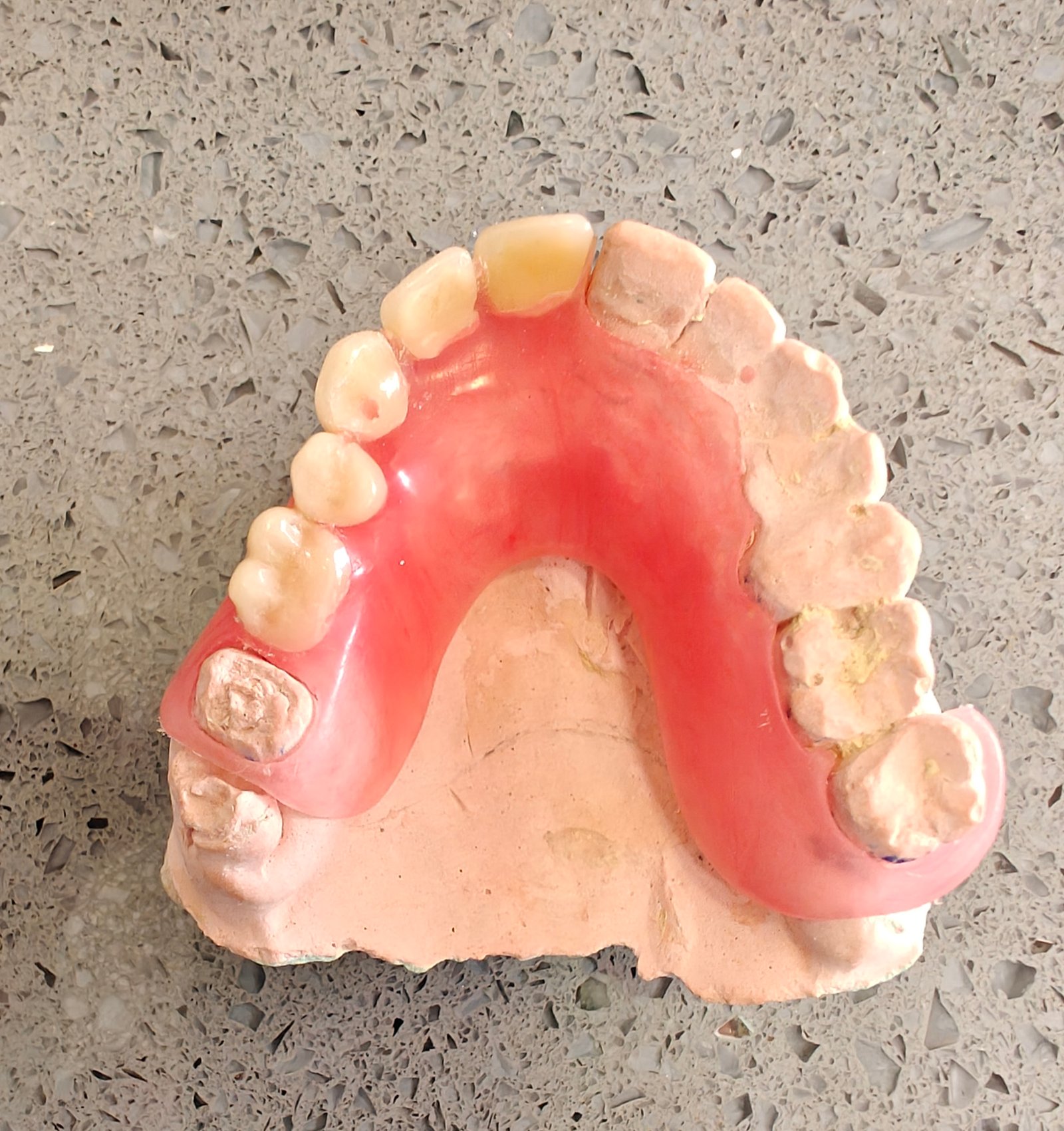
1. A More Affordable Tooth Replacement Option
Dental implants and fixed bridges may not be suitable for every patient because of cost, clinical requirements, or personal preferences.
Partial dentures can provide a more economical way to replace missing teeth, making tooth replacement accessible to patients who may not be ready for more expensive restorative procedures.
For patients looking for affordable partial dentures in Noida, a dental consultation can help determine the most appropriate design and treatment plan.
2. Replace Multiple Missing Teeth Without Surgery
One of the major advantages of removable partial dentures is that they generally do not require implant surgery.
This can be particularly helpful for patients who:
- Prefer a non-surgical tooth replacement option.
- Have medical or anatomical factors that complicate implant treatment.
- Need to replace several missing teeth.
- Want an interim restoration while planning definitive treatment.
Suitability depends on the patient's oral health and the condition of the remaining teeth and supporting tissues.
3. Restore Chewing Function
Missing teeth can make chewing difficult, especially when several teeth are absent or when the missing teeth are located toward the back of the mouth.
A well-designed partial denture can help restore chewing function and make it easier to manage a wider variety of foods. The level of comfort and chewing efficiency depends on the denture design, fit, support, and the patient's ability to adapt to the appliance.
4. Improve Your Smile and Confidence
Missing teeth, particularly those visible when speaking or smiling, can affect a person's confidence.
Partial dentures can replace missing teeth with artificial teeth designed to complement the remaining natural teeth. With appropriate shade selection, tooth arrangement, and denture design, they can improve the appearance of the smile.
5. Flexible Treatment Options for Different Clinical Needs
Partial dentures are available in several designs, allowing the dentist to select an appliance according to the number and position of missing teeth, the health of the remaining teeth, and the available support.
Options may include:
- Acrylic partial dentures: Often used as economical or interim appliances, depending on the clinical situation.
- Cast metal framework partial dentures: Designed to provide support and retention through a carefully planned framework.
- Flexible partial dentures: Made using flexible materials and considered in selected cases where their design is appropriate.
No single type is best for everyone. A clinical examination is necessary to determine which design is suitable.
6. Useful as an Interim Tooth Replacement
Partial dentures can also serve as temporary restorations while a patient heals after certain dental procedures or considers longer-term treatment.
For example, an interim partial denture may be considered following tooth extraction or during staged restorative treatment. The timing and design depend on healing, tissue changes, and the dentist's treatment plan.
Partial Dentures vs Dental Implants vs Dental Bridges
Choosing between these treatments depends on your clinical needs, expectations, and budget.
Feature| Partial Dentures| Dental Implants| Fixed Dental Bridges
Removable?| Yes| No| No
Surgery required?| Usually not| Usually required| Usually not
Replaces multiple teeth?| Yes| Yes, with suitable planning| Yes, in selected cases
Involves adjacent teeth?| May use remaining teeth for support and retention| Does not ordinarily require adjacent teeth to be prepared| Usually requires preparation of supporting teeth
Relative initial cost| Often lower| Generally higher| Varies with design and materials
Maintenance| Daily removal and cleaning| Regular professional and home care| Regular professional and home care
Each option has advantages and limitations. Dental implants are not automatically the best choice for every patient, and removable partial dentures are not simply a last resort. The right treatment is the one that meets the patient's clinical requirements and long-term goals.
Who May Need a Partial Denture?
You may be a candidate for a partial denture if you:
- Have lost one or more teeth but still have natural teeth remaining.
- Need to replace several missing teeth in the same arch.
- Prefer a removable alternative to a fixed dental bridge or implant.
- Are looking for a relatively economical tooth replacement solution.
- Need an interim restoration as part of a broader treatment plan.
However, patients with untreated gum disease, extensive tooth decay, unstable supporting teeth, or other oral health concerns may require preliminary treatment before a partial denture is made.
How Are Partial Dentures Made?
The process typically involves the following steps:
Step 1: Dental examination
The dentist evaluates the missing teeth, remaining teeth, gums, bite, and available support. X-rays may be recommended when clinically indicated.
Step 2: Treatment planning
The dentist determines the appropriate type of partial denture and discusses its expected benefits, limitations, maintenance, and cost.
Step 3: Impressions or digital scans
Records of the mouth are obtained to help fabricate an appliance that fits the patient's oral anatomy.
Step 4: Fabrication and fitting
The partial denture is made and assessed for fit, retention, comfort, appearance, and bite.
Step 5: Adjustments and follow-up
Minor adjustments may be needed as the patient adapts. Regular reviews help identify pressure areas, changes in fit, and any problems affecting the supporting teeth or gums.
How Should You Care for Partial Dentures?
Good denture care is essential for maintaining oral health and extending the useful life of the appliance.
- Remove and clean the denture as instructed by your dentist.
- Clean your natural teeth and gums thoroughly every day.
- Use a denture-cleaning product appropriate for the material.
- Avoid hot water that could distort the appliance.
- Do not attempt to bend clasps or repair a damaged denture yourself.
- Attend regular dental check-ups to assess the denture and the health of the remaining teeth.
- Seek an adjustment if the denture becomes loose, painful, or causes sores.
Your dentist will advise whether the denture should be removed at night and how it should be stored.
Are Partial Dentures Comfortable?
A new partial denture may initially feel unfamiliar and can require an adjustment period. Some patients experience temporary changes in speech, increased saliva, or difficulty adapting to the appliance.
A properly planned and adjusted denture can improve comfort and function, but it may not feel exactly like natural teeth. Persistent pain, ulcers, looseness, or difficulty chewing should not be ignored. Do not force yourself to continue wearing a denture that causes significant discomfort.
How Much Do Partial Dentures Cost in Noida?
The cost of partial dentures in Noida depends on several factors, including:
- The number of teeth being replaced.
- The material used.
- The type and complexity of the denture design.
- The condition of the remaining teeth and gums.
- Any additional treatment required before fabrication.
Acrylic, flexible, and cast metal framework dentures can differ considerably in cost. An examination is the best way to receive a treatment recommendation and an estimate based on your individual requirements.
Why Consult Zenith Dental Care for Partial Dentures in Noida?
At Zenith Dental Care, Sector 37, Noida, treatment planning focuses on your oral health, comfort, functional needs, and budget.
Whether you are missing a single tooth or several teeth, our team can assess your suitability for removable partial dentures and explain alternatives such as dental implants and fixed bridges.
Our goal is to help you make an informed decision about replacing missing teeth rather than choosing a treatment based on cost or appearance alone.
Frequently Asked Questions About Partial Dentures
1. Can partial dentures replace just one missing tooth?
Yes. A partial denture can be designed to replace a single missing tooth or multiple teeth, depending on the clinical situation and the available support.
2. Are partial dentures better than dental implants?
Neither option is universally better. Partial dentures are removable and often more affordable, while implants provide a fixed replacement option for suitable candidates. Your oral health, expectations, and budget should guide the decision.
3. How long do partial dentures last?
Their lifespan varies with the material, design, wear, maintenance, and changes in the mouth. Periodic adjustments, repairs, or replacement may be needed over time.
4. Can I eat normally with partial dentures?
Partial dentures can improve chewing, although they may require an adjustment period. Starting with softer foods and gradually progressing as comfort improves can help.
5. Do partial dentures damage natural teeth?
A properly designed and maintained partial denture should be planned to protect the remaining teeth and tissues. However, plaque accumulation, poor fit, and excessive forces can contribute to problems. Good hygiene and regular dental reviews are important.
6. Where can I get partial dentures in Noida?
You can consult Zenith Dental Care, Sector 37, Noida, for an examination and guidance on suitable tooth replacement options.
Restore Your Smile with the Right Tooth Replacement Option
Missing teeth should not be ignored simply because implant treatment or a fixed bridge may not be your preferred choice. Partial dentures remain a valuable option for many patients, offering a removable and often economical way to restore missing teeth and improve everyday function.
Looking for partial dentures in Noida?
Book a consultation at Zenith Dental Care, Sector 37, Noida, to discuss your tooth replacement options and find a solution suited to your needs.
207, Sector-37, Noida – 201303
Call: 9971414473 | 7042563914
