

Which Dental Crown Is Best for You? Zirconia vs PFM vs E-Max
Choosing the Right Dental Crown for Strength, Appearance and Long-Term Comfort
A damaged, weakened or heavily restored tooth may need a dental crown to help protect it and restore its function. But with different types of dental crowns available, how do you know which one is best for your tooth?
If you are considering a dental crown in Noida, understanding the differences between zirconia, PFM and E-Max crowns can help you make a more informed decision.
At Zenith Dental Care, Noida Sector 37, we believe that choosing a dental crown should depend on your tooth condition, bite, aesthetic expectations and long-term oral health—not simply the material name.
In this guide, we explain the differences between zirconia crowns, PFM crowns and E-Max crowns, their advantages, limitations and the factors your dentist considers when recommending the right option.
What Is a Dental Crown?
A dental crown is a custom-made restoration that covers the visible portion of a damaged or weakened tooth.
It is designed to restore the tooth's shape, appearance and chewing function while helping protect the remaining tooth structure.
A dental crown may be recommended in situations such as:
- A tooth with extensive decay or a large filling.
- A tooth that has undergone root canal treatment and requires additional protection.
- A cracked or weakened tooth, depending on the extent of the damage.
- A severely worn or damaged tooth.
- A tooth that requires restoration of its shape, function or appearance.
The type of crown recommended depends on the condition of the tooth and your individual treatment requirements.
Which Dental Crown Is Best for You?
There is no single dental crown that is best for every patient.
Zirconia crowns may be suitable when strength, tooth-coloured appearance and functional requirements are important.
PFM crowns (Porcelain-Fused-to-Metal) combine a metal framework with an outer porcelain layer and may be considered when a combination of strength and appearance is desired.
E-Max crowns are lithium disilicate ceramic restorations known for their natural-looking appearance and translucency. They may be particularly suitable for selected front teeth and aesthetic restorations.
The best crown depends on where the tooth is located, how much natural tooth structure remains, your bite and the appearance you want to achieve.
1. Zirconia Crown: A Strong and Tooth-Coloured Option
Zirconia crowns are made from zirconium dioxide, a ceramic material used in dental restorations.
They are popular because they combine a tooth-coloured appearance with good strength.
Advantages of zirconia crowns
- Tooth-coloured appearance without a metal framework.
- Good strength for appropriately selected teeth.
- Available in different zirconia formulations and aesthetic designs.
- Can be considered for both front and back teeth, depending on the material and clinical situation.
- Suitable for selected teeth requiring functional restoration.
What should you know before choosing zirconia?
Not all zirconia crowns are identical. Different formulations have different optical properties and strength characteristics.
A more translucent zirconia may offer improved aesthetics, while other formulations may be selected when strength is a greater consideration.
The final result also depends on crown design, tooth preparation, bite adjustment, cementation and oral hygiene.
Who may benefit from a zirconia crown?
Zirconia may be considered for patients who:
- Need a crown on a molar or premolar.
- Want a tooth-coloured restoration.
- Require restoration of a weakened tooth.
- Need a crown following root canal treatment, where clinically indicated.
- Want to avoid a metal framework in their crown.
Your dentist should evaluate the tooth and bite before recommending the material.
2. PFM Crown: Porcelain-Fused-to-Metal
PFM crowns combine a metal framework with an outer porcelain covering.
The metal framework provides structural support, while the porcelain layer gives the crown a tooth-coloured appearance.
PFM crowns have been used in restorative dentistry for many years and remain an option for selected patients.
Advantages of PFM crowns
- A metal framework provides structural support.
- The porcelain exterior offers a tooth-coloured appearance.
- They may be suitable for selected posterior restorations.
- They can be considered for certain cases involving extensive tooth damage.
Limitations of PFM crowns
The appearance of a PFM crown may not match the translucency of natural teeth as closely as some all-ceramic restorations.
In some cases, the metal framework may become visible near the gumline, particularly if gum recession occurs.
The aesthetic result depends on the design, porcelain thickness, tooth location and surrounding gum condition.
Who may benefit from a PFM crown?
PFM crowns may be considered when:
- A tooth requires a strong restoration.
- A metal-supported porcelain restoration is appropriate.
- The tooth's position and aesthetic requirements suit the material.
- The dentist determines that the framework and crown design are suitable for the bite.
PFM crowns are not automatically better or worse than zirconia. The decision depends on the clinical requirements of the individual tooth.
3. E-Max Crown: A Natural-Looking Ceramic Restoration
E-Max crowns are commonly made from lithium disilicate glass-ceramic.
They are known for their translucency and ability to reproduce the appearance of natural teeth.
For patients concerned about the appearance of their smile, E-Max may be an option worth discussing with their dentist.
Advantages of E-Max crowns
- Excellent potential for natural-looking aesthetics.
- Translucent appearance that can resemble natural enamel.
- Metal-free ceramic restoration.
- Available in different shades and designs.
- May be suitable for selected front teeth and other restorations where aesthetic requirements are important.
Limitations of E-Max crowns
E-Max is not the ideal material for every tooth.
Its suitability depends on factors such as:
- The amount of remaining tooth structure.
- The position of the tooth.
- Bite forces and grinding habits.
- Crown thickness and design.
- The type of restoration required.
For teeth exposed to high chewing forces or certain bite conditions, another material may be more appropriate.
Who may benefit from an E-Max crown?
E-Max may be considered for patients who:
- Want a natural-looking restoration for a front tooth.
- Have aesthetic concerns about their smile.
- Need a ceramic restoration for a suitable tooth.
- Have clinical conditions that allow an appropriate ceramic crown design.
A dental examination is necessary to determine whether E-Max is suitable for your tooth.
Important: This comparison is a general guide. Crown material alone does not determine the success or longevity of treatment. Your dentist must assess the tooth, bite and restoration design.
Which Crown Is Best for Front Teeth?
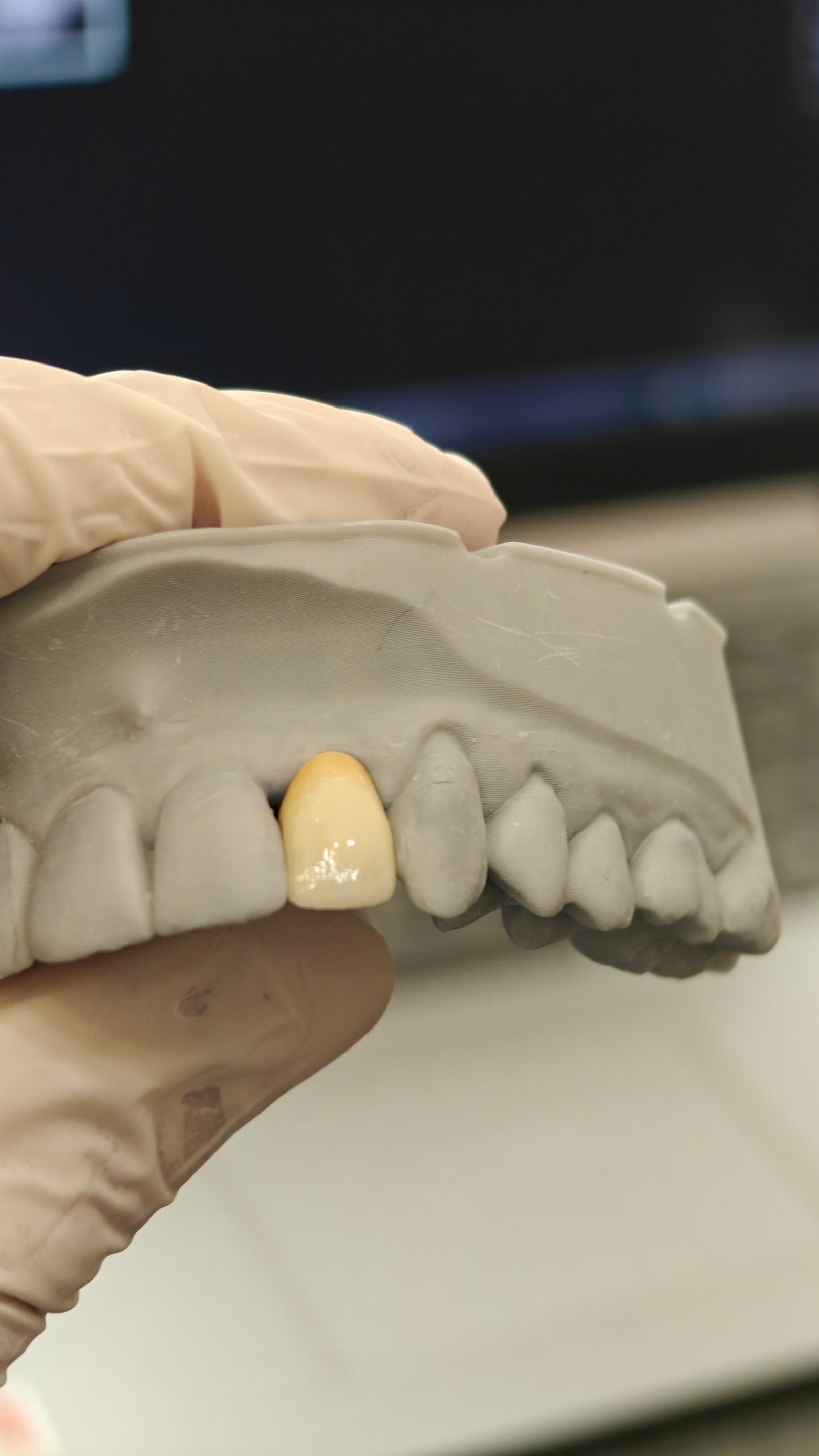
Front teeth are highly visible when you smile, so appearance is often an important consideration.
For front teeth, your dentist may evaluate:
- Natural tooth colour.
- Translucency.
- Shape and size.
- Gumline appearance.
- The amount of remaining tooth structure.
- Bite and contact with opposing teeth.
E-Max and selected zirconia materials may be considered for front teeth depending on the clinical situation.
PFM crowns may also be suitable in certain cases, but the metal framework can influence the final appearance.
If your priority is a natural-looking front tooth, discuss the aesthetic requirements and available ceramic options with your dentist.
The best result requires proper shade selection, crown design and attention to the surrounding teeth.
Which Crown Is Best for Back Teeth and Molars?
Back teeth experience substantial chewing forces.
For molars and premolars, the dentist must consider the amount of tooth structure remaining, the bite and whether the patient has habits such as teeth grinding.
Zirconia and PFM crowns may be considered for selected posterior teeth because of their functional characteristics.
E-Max may also be suitable for certain posterior restorations, depending on the material, tooth condition and bite.
There is no universal rule that every molar needs zirconia or every front tooth needs E-Max.
The restoration should be selected according to the tooth's actual clinical requirements.
Which Crown Is Best After Root Canal Treatment?
A tooth that has undergone root canal treatment may require a crown when the remaining tooth structure is weakened or the tooth needs additional protection.
However, not every root canal-treated tooth automatically requires the same type of crown.
The dentist evaluates:
- The amount of remaining natural tooth structure.
- The location of the tooth.
- The size of existing restorations.
- Whether the tooth has cracks or other damage.
- The bite and chewing forces.
For selected posterior teeth, zirconia or PFM may be considered.
For teeth where aesthetics are important, zirconia or other ceramic options may be discussed.
The final recommendation depends on the condition of the tooth after root canal treatment.
How Long Does a Dental Crown Last?
The lifespan of a dental crown varies from patient to patient.
It depends on several factors, including:
- Crown material and design.
- Quality of tooth preparation and fit.
- Bite forces and grinding habits.
- Oral hygiene.
- Gum health.
- Regular dental examinations.
- Whether the crown or supporting tooth develops complications.
A crown is not a permanent guarantee against future dental problems.
Even with a crown, the underlying tooth can develop decay near the margins, and the surrounding gums require regular care.
To help maintain your crown:
1. Brush twice daily with fluoride toothpaste.
2. Clean between your teeth every day.
3. Avoid using your teeth to open packages or bite hard objects.
4. Inform your dentist if you grind your teeth.
5. Attend regular dental check-ups.
Proper care helps protect both the crown and the natural tooth underneath it.
What Is the Cost of a Dental Crown in Noida?
The cost of a dental crown in Noida depends on several factors.
These may include:
- The type of crown material.
- The condition of the tooth.
- The amount of treatment required before crown placement.
- Laboratory and fabrication requirements.
- The complexity of the restoration.
- Whether additional procedures are required.
Zirconia, PFM and E-Max crowns may have different costs because their materials, fabrication methods and aesthetic characteristics differ.
A crown should not be selected based on price alone.
The right restoration should meet the tooth's functional requirements while considering appearance, durability and your treatment needs.
For an individual estimate, a dental examination is recommended.
How Do You Choose the Right Dental Crown?
Before choosing a crown, ask your dentist these important questions:
1. What is the condition of my tooth?
The amount of remaining tooth structure and the extent of damage influence the treatment plan.
2. Is the crown for a front tooth or a back tooth?
Aesthetic requirements and chewing forces differ according to tooth position.
3. Do I have a grinding habit or heavy bite?
Bite forces can influence the selection and design of the restoration.
4. Which material is suitable for my tooth?
Your dentist should explain why a particular crown material is recommended.
5. What care will my crown require?
Understanding maintenance and follow-up helps you protect the restoration.
Choosing the right crown involves more than comparing materials. It requires a personalised evaluation of your tooth and oral health.
Frequently Asked Questions About Dental Crowns
Which dental crown is best: zirconia, PFM or E-Max?
There is no single best crown for everyone. Zirconia may be considered for strength and functional requirements, PFM combines a metal framework with porcelain, and E-Max is known for its aesthetic properties. The best choice depends on the tooth, bite and clinical condition.
Is a zirconia crown better than a PFM crown?
Both may be suitable for selected teeth. Zirconia is metal-free and tooth-coloured, while PFM has a metal framework covered with porcelain. Your dentist can help determine which material is more appropriate for your tooth.
Is E-Max better than zirconia for front teeth?
E-Max may be considered when translucency and natural-looking aesthetics are important. Selected zirconia materials can also provide good aesthetics. The final choice depends on the tooth condition, bite and restoration design.
Which crown is best for molars?
Zirconia and PFM are commonly considered for selected molar restorations. E-Max may also be appropriate in certain cases. The dentist evaluates chewing forces, remaining tooth structure and bite before making a recommendation.
Can I get a crown after root canal treatment?
Yes, a crown may be recommended after root canal treatment when the remaining tooth structure requires protection. The need and type of crown depend on the tooth's condition and the amount of remaining structure.
Are dental crowns permanent?
Dental crowns are long-term restorations, but they are not guaranteed to last forever. Their lifespan depends on the material, fit, oral hygiene, bite forces and condition of the underlying tooth.
How do I know which crown is right for me?
A dental examination helps determine the condition of the tooth, its functional requirements and the most suitable restoration options. Your dentist can explain the advantages and limitations of each material for your individual case.
Choose the Right Dental Crown at Zenith Dental Care, Noida Sector 37
A dental crown can help restore a damaged tooth, improve its function and protect the remaining tooth structure when appropriately indicated.
But the best crown is not simply the most expensive or the strongest material.
It is the restoration that meets your tooth's clinical requirements, fits your bite and supports your long-term oral health.
At Zenith Dental Care, Noida Sector 37, we evaluate your tooth condition, functional needs and aesthetic expectations to help you understand the available crown options.
Whether you are considering a zirconia crown, PFM crown or E-Max crown, a personalised dental assessment can help you make an informed decision.
Have a damaged tooth or need a dental crown in Noida?
Book a consultation at Zenith Dental Care to discuss your treatment options and find out which dental crown may be suitable for your tooth.
📍 Zenith Dental Care
207, Sector 37, Noida – 201303
📞 Call: 9971414473 / 7042563914
🌐 Website: https://www.zenithdental.in/
Your smile is our priority.
